
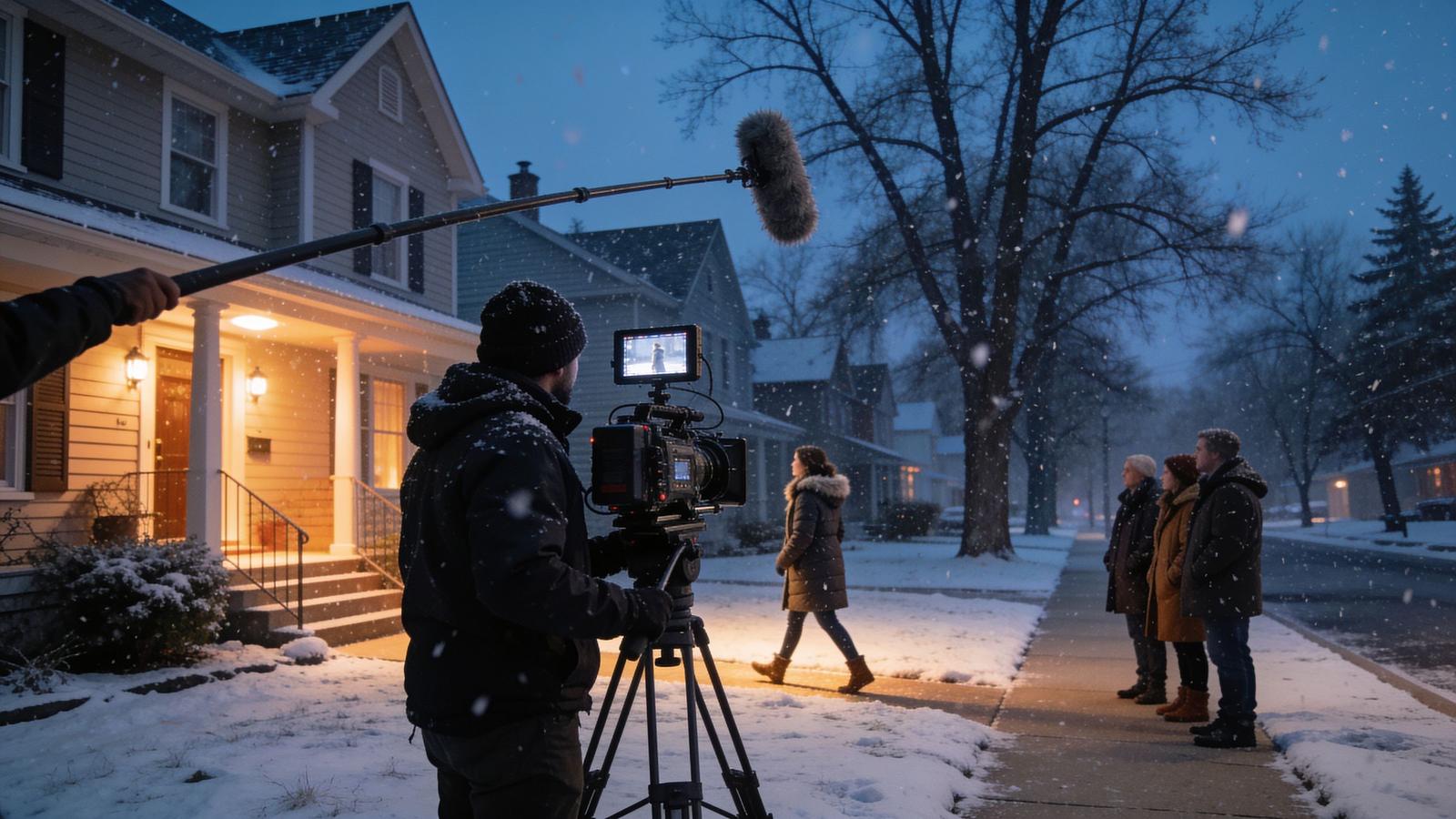
From budget to big screen to booked job.
You set a budget and a map. We plan it, produce your commercial, put it on the TV in the homes you picked, and make sure everyone who sees it can find you and get an answer, day or night.
Seven steps. Most of them are ours.
Here it is in order: what we do at each step, and what you do. Read the “You do” line under each step. It is short on purpose.
- Step 1: Plan
Tell us a budget and a map. Get a live plan in days.
Start with the planner on our Connected TV page: pick a monthly budget, add the zip codes you serve, and it estimates how many homes you can reach and how often they would see you.
Then we build the real plan: which households, which streaming services, how often, and what it costs. A live plan in days, not the six weeks of onboarding the big platforms ask for.
Try the planner- We do
- Size the area, set the frequency, choose the inventory and price it. Nothing is spent until you approve the plan.
- You do
- Tell us your budget, your area and who your best customers are. Then say yes or no.
- Step 2: Produce
We produce your commercial.
We write the concept and the script. AI helps us draft options quickly; people choose, rewrite and approve every line. Then our production partner, a videographer we hire, films it, and we finish it for the big screen.
Already have a video that works on a TV? We can run that instead.
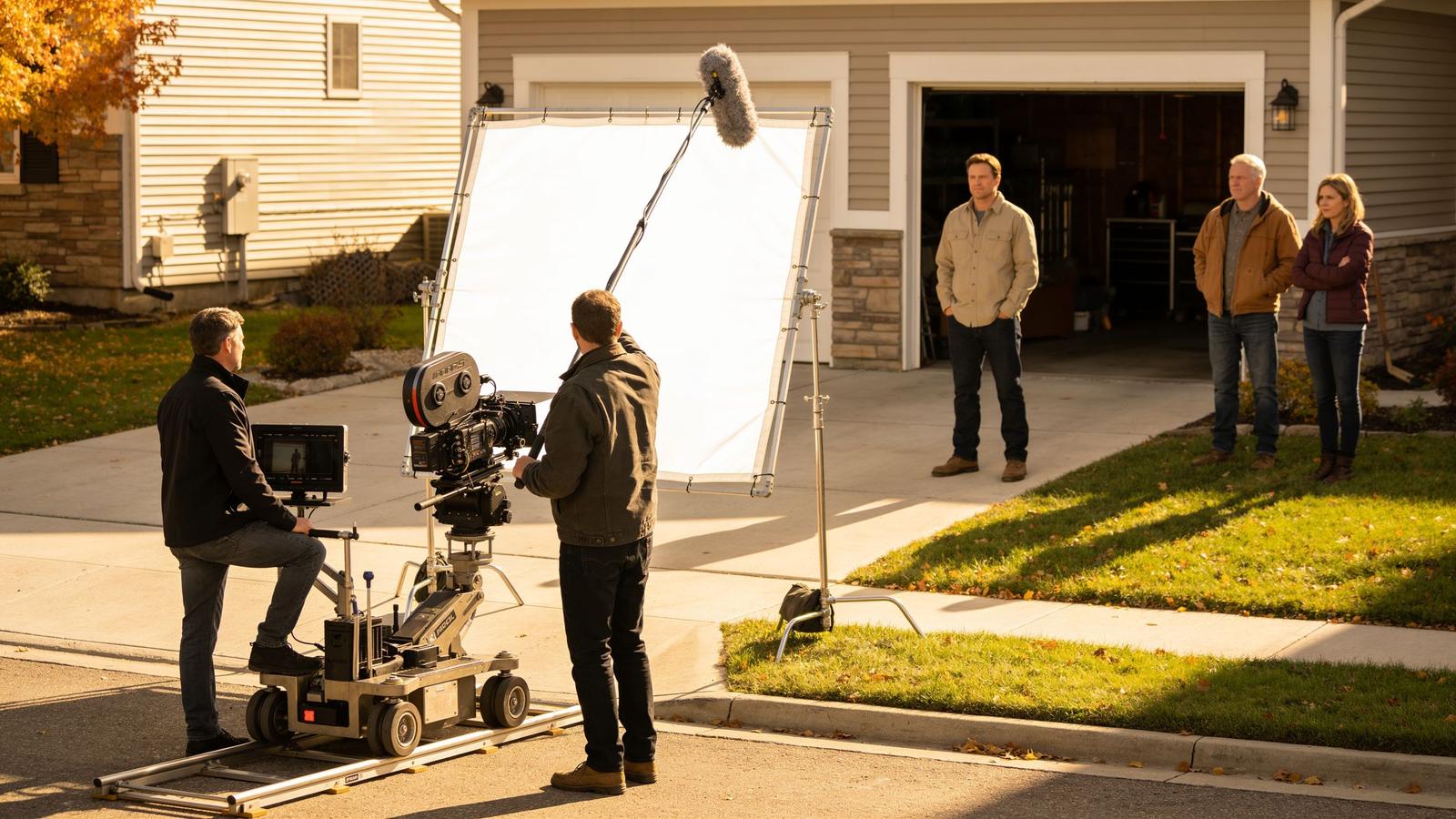
Illustrative Our production partner runs the shoot. We write it before and finish it after. - We do
- Concept, script, shoot and finish. Our production partner films it.
- You do
- Approve the script before anything is filmed, and the final cut before anything airs.
- Step 3: Target
Not 80 million households. The right 40,000.
National platforms are built for national budgets. A Minnesota HVAC company does not need 80 million households. It needs the right 40,000 in its trade area, on the big screen, often enough to stick. Your number will be different. The idea is the same, whatever you sell.
We draw the line around Minneapolis-St. Paul, Rochester or Duluth, or down to the zip codes and radius you actually serve, and we skip the viewers who are not your customer, like seasonal lake-home viewers when you only work in the metro.
- We do
- Household targeting, frequency caps, time of day, and the mix of TV and streaming audio.
- You do
- Tell us where your customers are, and where they are not.
- Step 4: Air
Full screen, on the TV they already watch.
Your commercial plays full screen and cannot be skipped, between the shows people chose to watch, on the streaming services already in their living room.
Where it airs
- Hulu
- Disney+ and ESPN
- Paramount+
- Peacock
- The Roku Channel
- Tubi
- Pluto
- YouTube on TV
Plus podcasts and streaming radio, a cheaper way to add reach alongside the TV. We buy the space on these services. We do not own them, and nobody honest says they do.
- We do
- Buy the space, traffic the commercial and check where it actually runs. Premium inventory first; the open market only when quality holds.
- You do
- Nothing.
- Step 5: Capture
When they search your name, you are already there.
People see the ad, remember the name, and search for it later. Your Google Ads, your SEO and your Google Business Profile catch that search, and your website turns the visit into a call or a form. This is the conversion stack: the machine that turns a TV view into a booked job.
On your search campaigns, an AI analyst reviews the numbers every day and proposes changes. A person approves each one before it goes live.
- Sees your ad
- Searches your name
- Finds you
- Calls or fills the form
- We do
- Build and run the website, SEO, Google Business Profile and Google Ads that catch the search.
- You do
- Nothing, beyond giving us access to what you already have.
- Step 6: Answer
Every call and every text answered. Any hour.
The worst outcome is a viewer who finally calls and gets voicemail. Krista, our AI receptionist, answers every call and every text, 24/7, and the lead is texted straight to you.
Hear her for yourself. She answers ours.(651) 615-8042- We do
- Set Krista up to answer for your business, and send every lead to your phone.
- You do
- Call the lead back.
- Step 7: Measure and improve
Ninety days, judged in the right order.
CTV needs a runway, so we tell you up front what each month should show, and what it should not.
- Month 1
Delivery and frequency. Your commercial builds toward a few views in each home. Do not judge leads yet.
- Month 2
Search usually starts moving. Branded search and direct traffic usually start to move, if the creative and the geography are right.
- Month 3
Lift is fair to talk about. Often 10 to 25% over your baseline, if measurement is set up. That is a typical range, not a promise.
Completion, the share of viewers who watch to the end, should sit between 90 and 98% on real CTV inventory. Under about 90 means something is wrong with the supply or the file, and we fix it. Every month you get a plain-English report: what ran, what moved, and what we are changing.
- We do
- Watch completion and frequency, change what is not working, and write the monthly report.
- You do
- Read one report a month. Tell us what the phone sounded like.
- Month 1
A real test runs $2,500 to $5,000 a month in media.
See estimates for your zip codesThe test
That is a single-market test: one metro or a tight set of zip codes, long enough to learn something. The low end works in the Twin Cities when the geography is tight. Statewide or several markets needs more. Below about $2,500 you can still run CTV, but it cannot build enough household frequency to judge anything, and a two-week flight is too short for the same reason.
The price of a view
Local premium CTV commonly costs from the high teens to the mid-30s, in dollars per thousand ads shown (CPM). A quote far below that is usually leftover remnant inventory, not premium streaming.
The planner
The planner on our Connected TV page turns a budget and your zip codes into estimated homes and views. They are estimates, shown as ranges, not a promise. The real plan comes from us, and nothing is spent until you approve it.
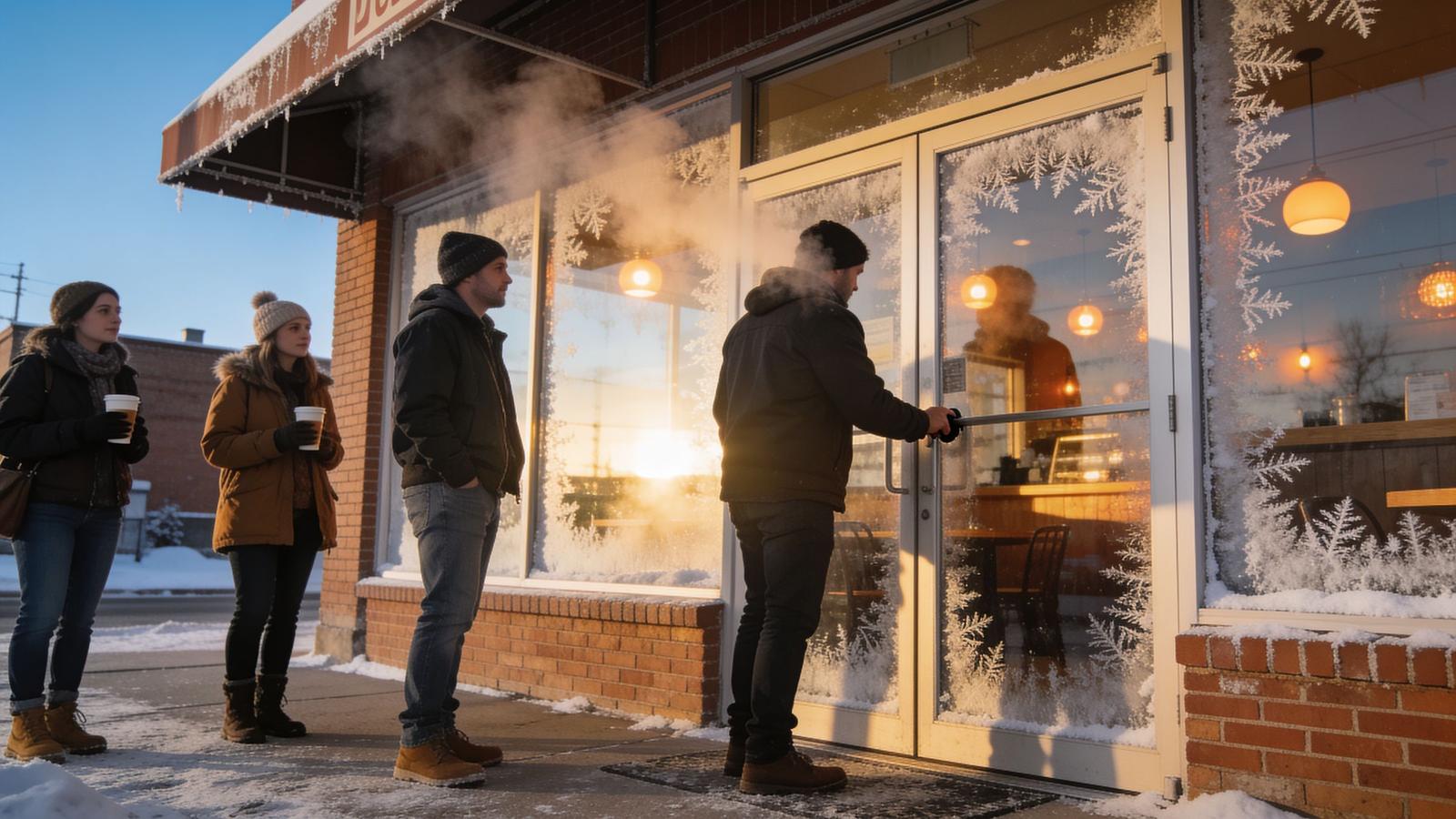
Customers at the door. Not impressions in a spreadsheet.
Before you start
What people ask about how it actually runs.
Do you make the commercial?
Yes. We produce your commercial: we write the concept and the script, and our production partner, a videographer we hire, films it. You approve the script before filming and the final cut before it airs. A person quotes production after hearing about the job. If you already have a video that works on a TV screen, we can run that instead.
How soon is it live?
The media plan is ready in days once we know your budget and your area, not the six weeks of onboarding the big platforms ask for. It airs as soon as your commercial is approved, and we will not put a date on production until we have heard about the job.
How small can my budget be?
A single-market test usually runs $2,500 to $5,000 a month in media. The low end works in the Twin Cities when the geography is tight; statewide or several markets needs more. Below about $2,500 you can still run CTV, but it cannot build enough household frequency to tell you anything.
How do I know it's working?
In order. Month 1 is delivery and frequency, so do not judge leads yet. In month 2, branded search and direct traffic usually start moving. By month 3, lift is fair to talk about: often 10 to 25% over your baseline if measurement is set up, though that is a range, not a promise. Completion should sit between 90 and 98% throughout, and every month you get a plain-English report.
What happens if something isn't working?
You hear about it in the monthly report, in plain English, with what we are changing. If completion drops under about 90%, that points to a supply or file problem and we fix it. That conversation is cheaper in month two than in month nine.
Do you keep adjusting after launch, or is it set and forget?
We keep adjusting. Frequency, geography, time of day and the mix of TV and streaming audio get tuned as the numbers come in. On search campaigns, an AI analyst reviews the numbers daily and proposes changes, and a person approves each one.
Which streaming services will my ad run on?
We buy ad space across Hulu, Disney+ and ESPN, Paramount+, Peacock, The Roku Channel, Tubi, Pluto and YouTube on TV screens, plus podcasts and streaming radio. We buy the space; we do not own those services, and nobody honest says they do.
Your ad on their TV. The lead on your phone.
Tell us your budget and your area. We'll come back with a plan and the estimates behind it, and nothing is spent until you approve it.