
Geofencing advertising, drawn around the places your buyers go.
We draw a boundary on a map: a competitor's lot, a trade show, a neighborhood where your crews are working. Phones that go inside it see your ads, there and for weeks afterwards.
- Down to a single address. A venue or a block, not a circle around a zip code.
- $2,500 to $5,000 a month in media is where most campaigns start.
- Counted by visits where there is a location to visit.
What geofencing advertising is
A geofence is a boundary drawn on a map around a real place. Geofencing advertising, also called geofencing marketing, shows your ads to the phones that go inside it.
The boundary is exact. It can be a single address, a venue or a block, rather than a wide circle around a zip code. We draw the actual shape on a map.
The part that matters most happens later. Once a phone has been inside the fence it joins an audience, and that audience keeps seeing your ads for weeks after the person has gone home. A visit to a competitor or a trade show says something about what they want. The ads act on it.
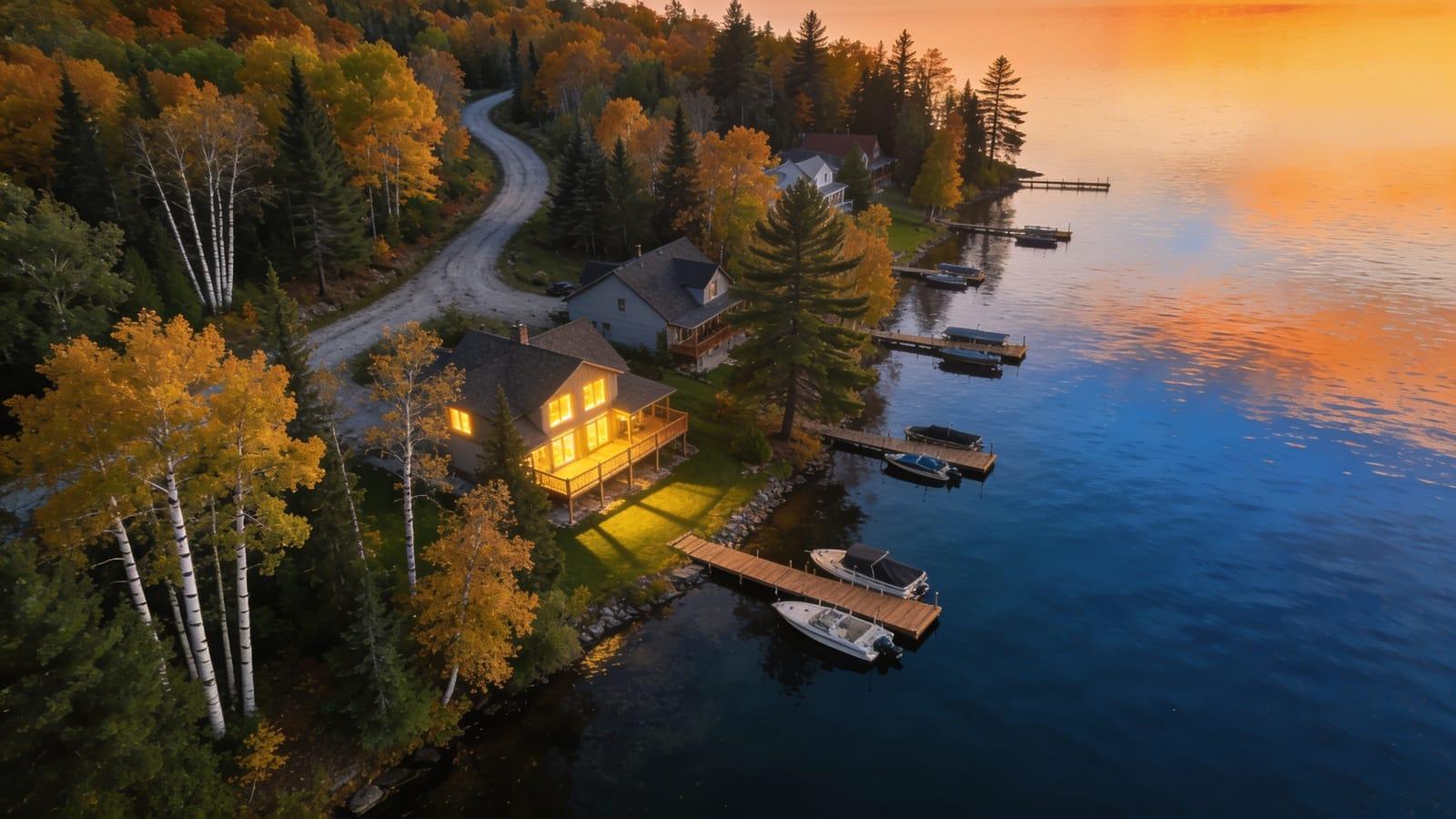
Neighbourhoods, venues and competitor lots — reached where they are.
How a geofencing campaign runs
- Pick the places
The locations where a visit tells you something: a competitor, an event, a neighborhood, a venue.
- Draw the fences
Each one is drawn on a map around the actual place: a single address, a venue or a block.
- Reach the phones inside
People there see your display ads while they are on the property.
- Keep going after they leave
The phones that entered become an audience, and the ads continue for three or four weeks.
- Report fence by fence
Impressions and clicks for each fence, and store visits where there is a location to count them at.
Where a fence earns its keep
Anywhere a physical visit says something about what a person wants.
- A competitor's location
- Trade shows and job fairs
- A neighborhood your crews are working
- Events and venues
- A limited-time promotion at one site
- Your own location, to count visits
Geofencing and geotargeting are different tools. Geotargeting reaches everyone in an area: a metro, a zip code, a radius. Geofencing reaches the phones that physically entered a place you drew, and follows up with them. Many campaigns run both.
What it costs to start
$2,500 to $5,000a month in media is where most campaigns start.
A tight area, such as a few zip codes or one neighborhood, works at the low end. A whole metro, several markets or a statewide plan needs more.
Below that it can run. It just does not reach enough of the right people often enough to tell you whether it worked.
A few busy places usually do more than a long list of quiet ones, because the audience is the people who pass through.
The measure is who showed up
A fence can work in both directions. One around a competitor finds the audience. One around your own location counts how many of those people later came to you.
That is why the published campaigns below report store visits, and not only impressions and clicks.
A take-out special for a pizza chain, counted at pickup
A pizza chain with locations in major metropolitan areas. 3 months.
A pizza chain wanted more take-out orders. For three months we showed a take-out special to people who had visited its main competitors nearby, and counted who came in to pick up.
- Store visits
- 888
- Geo lift
- 269.7%
- Impressions
- 402,525
Copied from the case study we published at the time. The client's name is withheld. A past result is not a forecast: yours will depend on your market, your budget and your offer.
Read how it was run and counted
In another, a car dealership reached people who had visited competing dealerships and counted the visits to its own lot. See that one too.
It runs well behind a TV commercial
The same boundary can decide which homes see a TV commercial. A neighborhood can be fenced for Connected TV, so the houses around a job site see your name on the big screen.
See Connected TVSell it under your own brand
Your agency keeps the client and the margin. We plan it, buy it and run it, and the report carries your logo.
The white-label versionGeofencing Digital Display across Minnesota
26 Minnesota markets, each with its own local page. We run campaigns anywhere in the country.
Related services
Questions people ask
What people want to know before they start, answered the way we would answer on a call.
How does geofencing advertising work?
We draw a boundary around a real place. Phones that go inside it are shown your ads, and they keep seeing them for three or four weeks after they leave. Where you have a location of your own, we can count how many of them later visited.
How much does geofencing advertising cost?
Most campaigns we run start at $2,500 to $5,000 a month in media. A tight set of places in one market works at the low end, and several markets need more.
Is geofencing the same as geotargeting?
No. Geotargeting reaches everyone in an area, such as a zip code or a radius. Geofencing reaches the phones that physically entered a place we drew on a map, then follows up with them afterwards.
Can geofencing put my ad on a television?
Yes. A neighborhood can be fenced for Connected TV, so the homes around a job site or inside one part of town see your commercial.
How precise is a geofence?
Down to a single address, venue or block — not a wide radius circle around a ZIP code. We draw the actual boundary on a map.
How long do you keep reaching someone after they leave the fence?
Weeks. Once a device has been inside the fence, it's added to a retargeting audience that keeps running well after they've left the location.
What kind of locations does this work for?
Competitor storefronts, trade shows and events, job sites, even a specific venue for a limited-time promotion — anywhere a physical visit tells you something about intent.
Tell us the area and the budget. We will show you the plan.
Tell us your goals. We'll show you the plan — and the numbers behind it.